
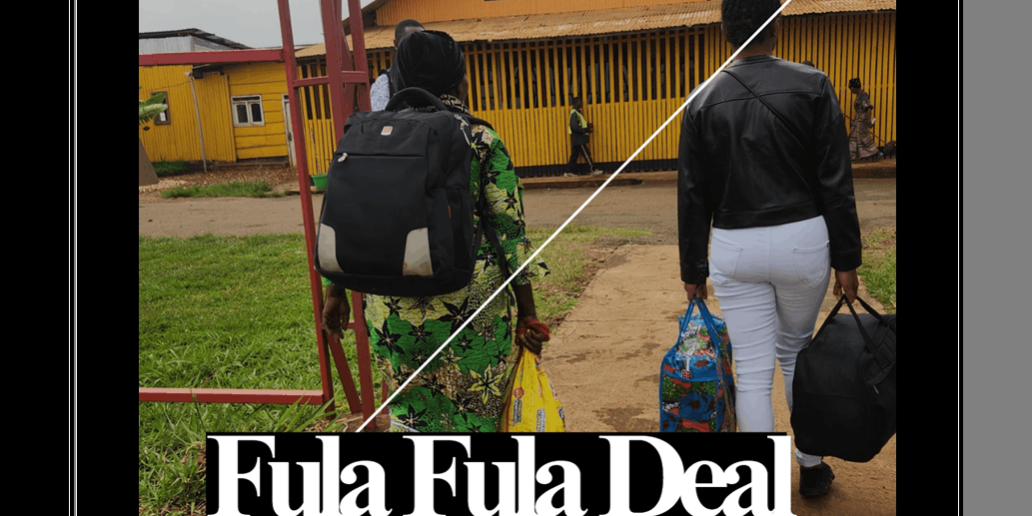
Exclusive Participatory Investigation | 2024-2025
FULA FULA DEAL, at the heart of the FARDC air force mafia in Kivu
An exclusive participatory investigation by the InfoCom research and expertise centre FACTUALITÉ Afrique. The project « Filigrane », specialising in the authentication of documents and sources, led by the same centre, participated in the certification of the documents that will appear throughout this investigation.
Work carried out in GOMA / BENI / WALIKALE in 2024 and 2025
OSINT Investigation✓ Documents authenticated by Filigrane
In Kivu, where the Congolese army has been fighting fighters from the March 23 Movement (M23) — part of the Alliance Fleuve Congo/AFC political-military platform — since late 2021, a major mobilisation of military aviation has been put in place by the general staff of the Armed Forces of the Democratic Republic of the Congo (FARDC). Behind this logistics, supposed to supply the various front lines with troops and essential war materiel, lies a completely illegal business.
A clandestine network within the military fleet
During a series of investigations into the FARDC air fleet between Goma, Beni and Walikale, FACTUALITÉ Afrique has managed to establish a link between several FARDC Air Force officers and a transport network recruiting civilian travellers. These passengers are then transported in exchange for a flat-rate payment of between 100 and 200 US dollars — or for free — in aircraft piloted by white Eastern European nationals, with no compliance with navigation rules: no identity checks, no check-in of luggage carried, and no seats in the aircraft.
Mineral trafficking and biodiversity
Mineral packages consigned by officers leave the forests of Beni, Lubero, Walikale and Ituri. At the departure airport of Mavivi, in Beni, any handling or searching of them is strictly forbidden, as they are flanked by officers’ names on their rudimentary packaging. They are loaded in the same place as the thousands of ammunition crates serving as seats for the passengers.
At the private tarmac — the Air Force stopover at Goma airport — intermediaries come to collect these packages, which are then sold on various local and regional mineral smuggling markets. Biodiversity species, such as bushmeat, are also reportedly part of the cargo, according to our research.
Read more: FULA FULA DEAL, au cœur de la mafia de la force aérienne des FARDC au Kivu
Wasso’s testimony
On this misty morning in early June, Wasso — a pseudonym — needs to travel urgently to Beni from Goma. With no financial resources in his pocket, he first tries to contact the airlines serving this town, the capital of the eponymous territory, from the provincial capital Goma, to check the availability of seats. At that time, the Goma-Beni road via Butembo, passing through the Virunga National Park, was closed to traffic by the Congolese government due to the offensive against the M23, making flying one of the most widely used means of travel during this period.
When calling his contact at the airport to check if they could find him an available seat on a plane to Beni, regardless of the price, the latter confirmed that all flights were fully booked for the next two weeks.
« Compagnie Africaine d’Aviation, CAA, used to reserve one or two seats for emergencies and resell them at the last minute at double the usual fare. But I have just checked: even those seats are sold out. »
Agent based at Goma airport
Stranded, Wasso tries one last move: going directly through the airlines. He calls his contacts at the airline Busy Bee. They give him the same answer: no seats available for the next two weeks.
The « plan B » of the military flight
It is in this climate of uncertainty that he receives a phone call from his contact working at the airport, with whom he had spoken just a few minutes earlier. The latter has just found an option to get him onto a military plane due to deliver ammunition crates to Mavivi airport, located about ten kilometres from Beni, which serves the Congolese army, the United Nations Organisation Stabilisation Mission in the Democratic Republic of the Congo (MONUSCO) and civil aviation in this region of North Kivu.
« Take a motorbike to the airport quickly. The plane leaves at 7:30 am and boarding will close at 7:00 am. Don’t forget your ID and bring plenty of dollars. »
Contact at the airport, 6:45 am
His contact tells him that the military plane makes several stops between the two cities, but that this schedule is not strictly respected, hence the importance of seizing the opportunity. It should also be noted that, to reach Goma airport from the residential areas — Les Volcans, Himbi, Kyeshero, Office, Katindo — residents must cross the Birere district, a commercial hub located in the Mapendo district, renowned for its massive traffic jams during rush hour. This explains the suggestion to reach the airport by motorbike in order to get ahead of this obstacle.
The clandestine boarding
Very quickly, Wasso grabs a small, hastily packed bag and jumps onto a motorbike. Arriving at the airport gate, he is forbidden to enter because he does not have a plane ticket allowing him access to this area reserved for travellers or airport staff. He then calls his contact inside, who meets him at the entrance in a Congolese army 4×4 jeep to help him enter the airport grounds. The soldiers in charge of securing the gate — a unit of the Republican Guard, a special force responsible for the security of the President of the Republic — manage to extort a few Congolese franc notes from Wasso before letting him through, while wishing him a good flight in Lingala, the language most widely spoken by Congolese soldiers.
Wasso and his contact pass the entrance to the tarmac intended for civilian flights, the MONUSCO terminal, and then move further ahead to the area dedicated to Congolese army flights. Once there, his contact whispers the name of a Congolese army officer to the ground crew, indicating that he is the one authorising Wasso’s boarding. The latter remembers the name mentioned by his contact: « Captain Fabrice ». Wasso is immediately told to hurry and board. He waves goodbye and makes another gesture promising to call his contact once he lands, as he had not yet handed over the money for this air transport or his commission.
No check-in or passenger screening
From the airport gate, a military jeep from the Armed Forces of the Democratic Republic of the Congo picks up Wasso and his suitcase. He passes the car park and the terminal of the United Nations Organisation Stabilisation Mission in the Democratic Republic of the Congo (MONUSCO) to reach a barrier. Soldiers on site communicate via their walkie-talkies and open the barrier.
The driver in Congolese army fatigues (trousers and T-shirt) seems to be used to the system. He assures Wasso that he will travel as he is among the last ones the captain was waiting for. Arriving in front of the plane, positioned on a tarmac reserved for the FARDC airbase stopover, located near the Goma airport control tower, a man (a white man) tells him that he is the pilot and that he must board quickly because the aircraft has to head for Beni. Wasso shows no identity document and no one opens his suitcase.
Inside the plane, he is surprised to see it packed with about ten civilians and fewer than five Congolese army soldiers. No seats are available in this fuselage, where ammunition crates are stacked on wooden pallets. A Congolese man speaking local languages (Lingala and Swahili) and Russian serves as the loadmaster for this flight. He is the one who tells Wasso that he should sit on these crates, which serve as seats. Wasso recognises the crew’s language from the sign « АВАРИЙНЫЙ Выход » superimposed over the English words « EMERGENCY EXIT » next to a plane window, which he captures in a photo.
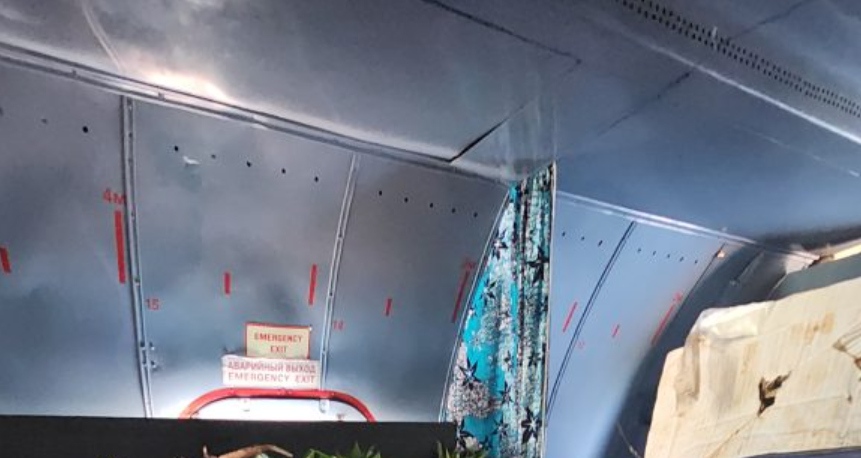
The two pilots smoke and tell the passengers directly that the flight will be less than an hour. There are neither seatbelts for everyone nor any emergency instructions provided by the crew, who were translated by the loadmaster, who draws a curtain separating the passenger cabin.
Once settled, Wasso calls his contact and thanks him for the service. He promises to send him the agreed 180 US dollars for the ticket via mobile money once he lands in Beni. The latter wishes him a good flight while reassuring him that the aircraft is safe. The giant of the skies begins its take-off, leaving this tarmac filled with several combat aircraft and helicopters (Sukhoi-25, Mi-8…). The flight is calm and quiet, without much turbulence. A trickle of water from the fuselage roof seems to alert the passengers, but the loadmaster comes to reassure them, indicating that this is part of the aircraft’s normal operation.
Some of the passengers share stories of their first time using this mode of transport, with some highlighting how smooth it is, without much hassle or payment of taxes, as is the case at civil aviation terminals where every passenger flying within Congo must pay between 10 and 20 dollars for the Go-Pass boarding tax. This amount is increased to 50 US dollars if it is an international flight, not to mention other extortions of travellers by various services (border health controlling yellow fever vaccination cards, the migration department checking identity documents…). But none of this was paid because no state service is deployed on this tarmac, which is 100% controlled by the Congolese army.
Once landed at Mavivi airport, 15 kilometres from the city of Beni, it is the soldiers on site who act as air traffic controllers. They help passengers disembark from the aircraft and handle protocol for the crew, officers, and their dependants. Civilian passengers must go through the various immigration and intelligence offices to explain the reason for their arrival in this operational zone, where the Congolese army is hunting down the Allied Democratic Forces (ADF) rebels, affiliated with the Islamic State, which considers it its Central Africa Province (ISCAP). Among these security service members, some are already marketing their aviation system by distributing their contact details to civilian passengers so they can call them back if they have another trip or recommend their relatives to them to facilitate booking seats on this type of aircraft.
IN BENI, A GHOST TRAVEL AGENCY TIED TO THE AIR FORCE
Unlike in the city of Goma, Wasso notices a few days before his scheduled return date, a week after his arrival, that the system in Beni is more organised than in Goma. He was put in touch by his Goma contact with an agent who would facilitate booking his return ticket. The latter sees Wasso’s WhatsApp statuses and takes the initiative to regularly send him notifications about flight availability. Throughout the week, he informs his client that all flights to Goma are full.
On the evening of Wednesday 12 June, he calls Wasso to ask him to have a suitcase ready to travel the following morning. « I will call you at any time before 10 a.m. local time and you will need to arrive at the airport within the next 30 minutes to board. The plane will come from Goma loaded and will pick up anyone who is ready at Beni airport to head back to Goma. It is the same plane that brought you here ». On 13 June at 9.40 a.m., the agent calls Wasso, asking him to pay via a mobile money number he provides because the plane has just begun its descent to land in Beni. « Head to the airport now while I take care of your route sheet, which will serve as your boarding pass for the plane » the agent specifies.
Wasso complies, sending the agreed 150 US dollars to the phone number indicated to him and heads to the airport. Arriving at the entrance of Mavivi airport, he has to negotiate so that the car bringing him here does not pay the 5 dollars required as an entry fee. He claims to be a member of a military family. The agents then ask him for a tip. He promises that those accompanying him will do so on their return. Clear path, and head to the waiting room, a shed made of wooden planks where there are fewer chairs than occupants. Unlike the outbound flight, which carried about ten civilians and fewer than 10 soldiers, here the numbers have almost doubled for both civilians and soldiers.
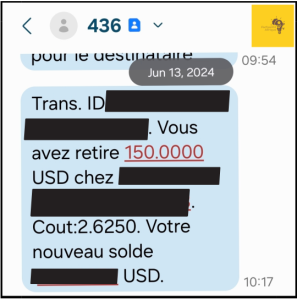
The route sheet and labelling of passengers as part of military families is the modus operandi here
This is how a document is handed to Wasso by the agent who was handling his « plane ticket ». He hands him two documents printed on a white A4 sheet. The letterhead of these documents bears inscriptions related to the Congolese army and they are stamped with at least 3 seals from specialised services of the FARDC air force military aviation.
The following mentions give details on the entities involved: « Armed Forces, Air Force, Thirty-Third Air Group, Thirty-Second Air Terminal, Command » on the document’s letterhead. In addition to the seals, the documents bear the names and signatures of military officers in charge of these services.
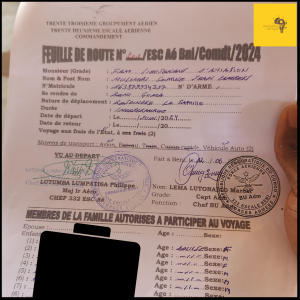
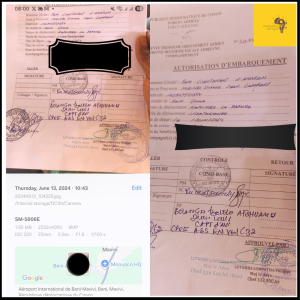
Yet on these documents (route sheet and boarding authorisation), Wasso’s name does not appear as the main passenger. He is listed alongside five other names, presented as the children of an aviation lieutenant whose identity, service number, and other details are listed at the beginning of the document. Yet Wasso knows neither this soldier, who has become his circumstantial father, nor these five other civilians, presented as his brothers and sisters on these two documents. Moreover, delving into the cultural richness of the region, he notes that the names of the 6 passengers on these two documents belong to different tribes of the Kivu region [natives of the east of the country], while the main traveller, designated by these documents as their biological father, bears a name from the cultural heritage of Kasaï (in central DRC).
NO WEIGHING OR SORTING OF LUGGAGE: A BOON FOR FRAUD AND VARIOUS TRAFFICKING
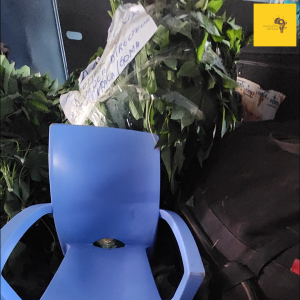
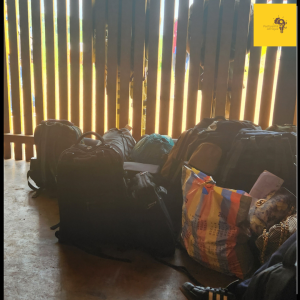
In the waiting room, Wasso observes that boarding time arrives without any service having checked the weight or nature of the items carried in the various pieces of luggage. Unlike the traditional flights he regularly takes, he also notes that no specific format is required for packing luggage. Suitcases, which are usually recommended on flights, are rare in these piles of backpacks, plastic bags, and even containers. When boarding is announced, it is the soldiers who improvise as baggage handlers. For a few Congolese francs, they indicate that they will help passengers load their luggage, as the boarding of passengers and luggage will take place from the rear ramp of the aircraft.
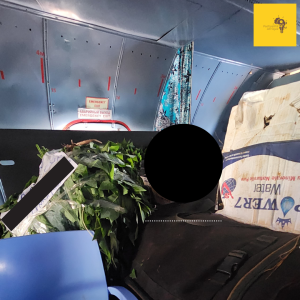
At the foot of the plane, Wasso witnesses indescribable chaos. Bags of flour, charcoal, animals, piles of cassava leaves, bunches of bananas… are all loaded, and no weighing is carried out.
The officers board first and head towards the cockpit. Then follow the soldiers, who at the same time help the women climb the ramp. This return flight is not carrying ammunition, and the benches have been set up to serve as seats. Some have brought plastic chairs, bought on the local market, for their comfort on board. A soldier explains to Wasso that they manage to transport live animal species that other flights do not accept, citing parrots or dogs, as well as bushmeat, which is prohibited in conventional transport.
As with the outbound flight, it’s up to the pilot to decide on stopping boarding, the verification of all entry locks and the departure announcement is interpreted by the loadmaster. Back to Goma, where another team of soldiers and members of military families have come to wait for the passengers right at the foot of the plane.
MINERALS?
During unloading, a team of soldiers seems very busy identifying a package. When this package, wrapped in a plastic bag imported from China – too heavy according to the young civilians and soldiers lifting it – is on the ground, these soldiers step in to hold it back. They are convinced that it contains minerals sent from Walikale to Beni and then to Goma to be sold through smuggling. The young civilians and soldiers tasked with putting it into a Congolese army 4×4 jeep tell them they are unaware of the bag’s contents. They mention the name of an officer who commissioned them to retrieve it. The soldiers who came to check the bag make a few phone calls and return, ordering these makeshift handlers to take their package. It is quickly loaded into the jeep, which speeds towards the airport exit.
A 3-TIER SYSTEM, LESS STRESSFUL BUT POORLY REGULATED
Rested after his journey in this adventure within the FARDC Air Force aviation, Wasso decides to meet his contact who had enabled him to experience this means of transport and, above all, not to miss his two trips at a time when the Beni-Goma road was blocked and all seats with civil airlines were unavailable. It is in a lively corner where cheese and sausages (often bought by travellers) are sold that the two choose to meet. Wasso’s objective is to understand how this transport system works and, above all, to find out a bit more about how the money paid by civilian passengers is distributed.
Here are the explanations received by Wasso, which fall into three scenarios:
1. Search for travellers by intermediaries
Normally, travelling between Beni and Goma by plane cost the passenger more than $200, with ticket prices varying between 170 and 200 US dollars, to which must be added 10 dollars for the Go-Pass boarding tax and 5 dollars for other taxes from the North Kivu Provincial Revenue Directorate (DGRNK). In addition to these payments, for which receipts are given to travellers, there are illegal fees to be paid to border health service and migration directorate agents, who are located in the booths before the waiting room. Refusing to pay these illegal fees often exposes the traveller to stress because the check of their travel documents (ID and vaccination card) is rejected, with these agents prioritising passengers who have served them what they call “water” (a few Congolese franc notes, the amounts of which they sometimes manage to set: 5 or 10 dollars).
It is this series of hassles, the exorbitant price of plane tickets and, above all, the lack of immediate availability that intermediaries exploit. They offer another, less stressful travel alternative. Some passengers testified to Wasso that they paid just 75 US dollars to board these flights, while relatives of soldiers (friends, girlfriends…) have the same privilege as their family members to board these planes for free, provided they are put on the manifests by these soldiers (mainly officers).
The intermediary Wasso spoke to indicated that for each client obtained, the soldiers whose quota allows this passenger to board pay 10 dollars to this passenger’s recruiter and pocket the rest, which they will share with those who allow them to bring passengers onto the plane.
2. Going through the RVA, the air traffic controller
The heads of navigation and aviation safety services have links with the technical teams and the aircraft crew. This professional proximity creates several opportunities for collaboration. This is how they manage to find ways to convince pilots to carry the passengers they recommend on their flights.
3. Direct contact with the crew, the “business class” model
The intermediary explains to Wasso that several people who avoid being seen by other passengers on these military flights prefer to contact the crew directly. “It’s the loadmaster who ensures contact between the two parties. Here, the price is flat and non-negotiable: $200 per trip and a guarantee of travelling in the cockpit,” he says.
NO WEIGHT LIMIT, A FREIGHT PARADISE
To transport one’s own luggage on civil airline flights, a limit varying between 15, 20 and 46 kilograms is imposed depending on the destinations and the airlines operating in the Kivu region. The categories of goods are also clearly determined by strict protocols. And rigorous screening is applied before each flight. Excess baggage is taxed heavily, with amounts varying between 3 and 10 US dollars per kilogram. This same principle is applied by cargo planes for freight transport, sometimes with a reduction of up to $2.5 when shortages are noted in shipments. Yet to board military flights, no checks or luggage weight verifications are carried out. Moreover, the tools to carry out these operations are not available on the tarmac used by these planes. Hence the popularity of this means of transport for both passengers and cargo.
“Some packages are sent free of charge and others are paid for at a flat rate depending on the mood of the pilot, the loadmaster or the RVA agent. It all depends on where the recommendation to load the package comes from.”
Contacted by FACTUALITÉ Afrique, the Armed Forces of the Democratic Republic of the Congo indicated that the transport of military dependants on the government army’s Air Force planes is a routine activity and does not violate any regulations governing this sector. However, the Congolese army stated that it was unaware of its members or any other actor in the sector charging for these air transport tickets, encouraging FACTUALITÉ Afrique to reveal the results of its investigations in the public interest.
“Most of the time, when a soldier is transferred, their family members and all their dependants must follow them to their new posting. And with the long distances separating the regions of our country, flying remains the only way to travel. These civilian profiles are eligible for FARDC air transport, and they are the only ones we know of and see on the various Air Force rotations,” a member of the Congolese army spokesperson’s office told FACTUALITÉ Afrique over the phone.
“However, if there is a mafia in both personnel and equipment transport, we have no evidence of this practice. The publication of data proving the existence of such a network would help the country to better understand this phenomenon,” added the same source, whose identity was kept anonymous by FACTUALITÉ Afrique due to the sensitivity of the subject.
